
"Which hotel is most suitable for our company?", "When should the flight ticket be bought?", "How much is the meal allowance?" If your employees constantly ask you these questions or if everyone acts according to their own whim, you need a Corporate Travel Policy. A well-written policy both protects the company's budget and ensures the comfort and safety of employees.
Why is a Travel Policy Necessary?
When there is no written set of rules, "gray areas" emerge. While some employees see staying in the most luxurious hotel as their right, others may stay in an unsafe hostel thinking of the company. This inconsistency both makes cost control difficult and creates a perception of "unfairness" among employees.
The policy document clarifies who can spend what, when, how, and how much. It standardizes processes and speeds up the decision-making mechanism.
Finding the Balance
A too strict policy reduces employee satisfaction and turns business travel into torture. A too loose policy punches a hole in the budget. The goal is to find the golden ratio between "Comfort" and "Cost".
Key Elements of an Effective Policy
For your policy to be successful, it must clearly include the following headings:
Spending Limits
Instead of "reasonably priced hotel", set concrete figures like "Nightly ceiling price for Istanbul is 1,500 USD, for London 200 GBP".
Approval Chain
Which transactions below a certain amount will pass without approval? Which ones above a certain amount will require General Manager approval?
Early Booking
The rule "Ticketing must be done at least 7 days before the travel date" can reduce costs by 20%.
Flight Class
Set logical rules based on flight duration, such as "Economy class is mandatory for flights under 4 hours."
From Paper to Digital: Embedding Rules into the System
Even the best written policy is just a piece of paper if it is not implemented. Employees may forget or ignore the rules. The solution is to integrate your policy into the software.
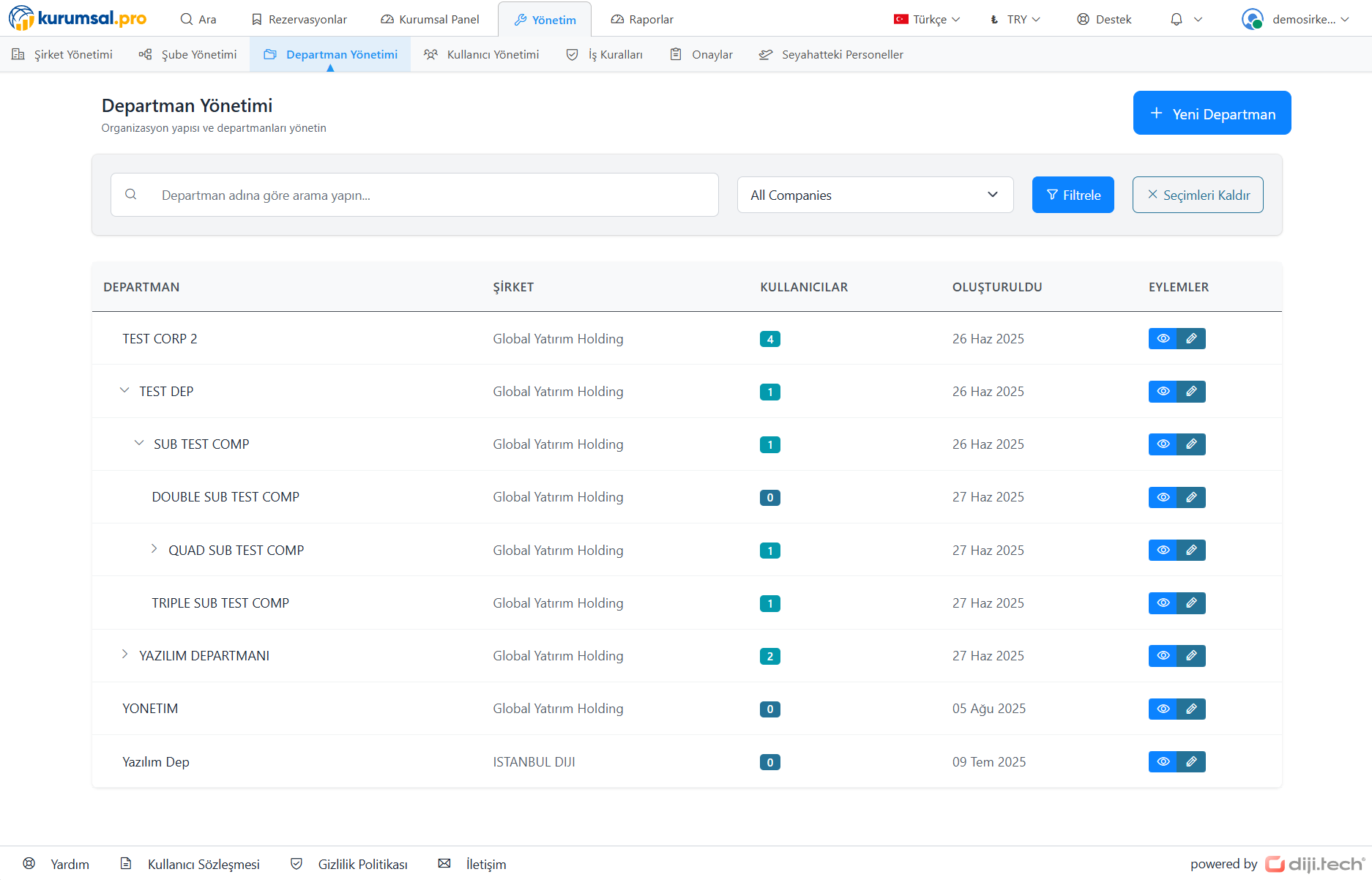
With Kurumsal.pro, you define your travel policy in the system:
- When an employee enters the system, they only see hotels and flights allowed by their policy.
- When they try to make a choice outside the limit, the system gives an "Out of Policy" warning.
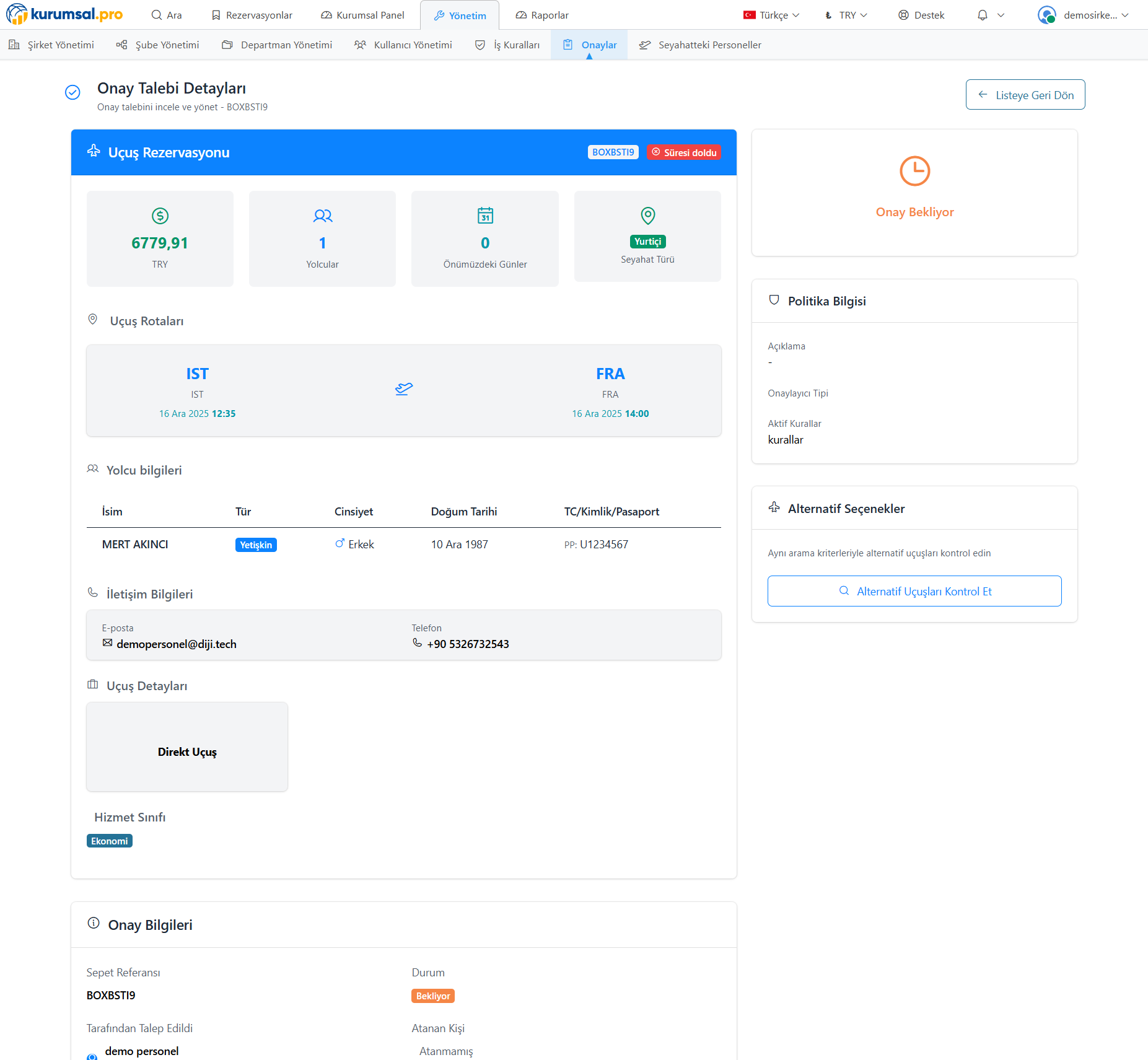
- For exceptional situations (e.g., last minute emergency meeting), an "Out of Rule Request" can be created, but this request falls to the special approval of the top manager.
Frequently Asked Questions
How often should we update our policy?
Due to inflation and market conditions, it is recommended to review per diem and hotel limits at least once a year. You can make these updates in seconds via the system.
Can I set different rules for each department?
Yes. You can define different travel policies for the sales team and different ones for senior management. Kurumsal.pro allows customization based on department and person.
How do I track those who do not comply with the policy?
Thanks to our "Policy Compliance Report", you can see graphically which department or staff member violates the rules and how often.